
Introduction
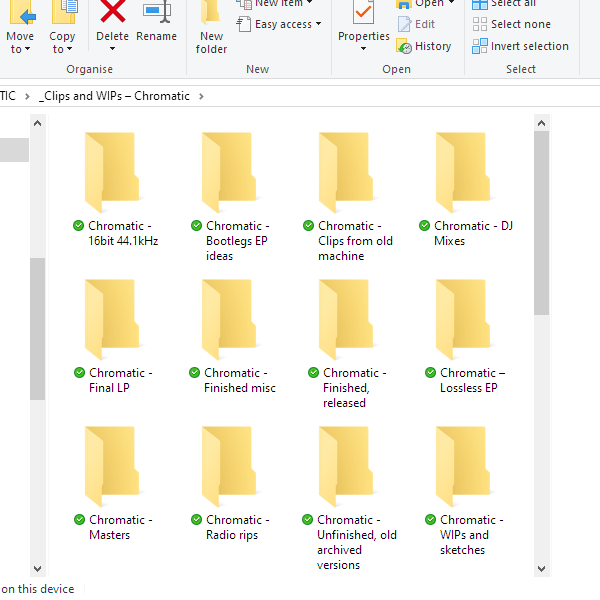
Any self-respecting music producer will typically be sitting on a folder containing dozens, if not hundreds, of unfinished tracks, often with amusing names such as “FINAL FINAL FINAL mix v3”!
Some might be short loops that never developed into anything exciting, whilst others could be completed arrangements that are just a few tweaks away from being ready for release. And then there are those tracks you swear are finished, only to open the project months later and immediately start changing things again.
As somebody who’s spent well over a decade producing music as well as mixing and mastering songs for other artists, I’m very familiar with this particular problem.
So, how do you actually know when a track’s ready to leave the clips folder? Is there a minimum standard that music needs to meet before it’s ready for release, or are we sometimes guilty of holding onto perfectly good tracks because we’re not quite ready to let them go?
What Does Finished Sound Like?
As an engineer, I can tell you that there’s a difference between a track being technically ready for mixing or mastering and the artist being satisfied that it’s creatively finished.
When I receive a mix from a client, I’m listening for things such as the overall frequency balance, dynamics, stereo spread and how well the different elements sit together. I’m also listening carefully for common technical issues, such as unwanted distortion, excessive resonances or an overly dynamic low end.
But there’s another important consideration: does the track actually work musically?
A mix can be superb technically, but still have a lacklustre arrangement. Conversely, a record may have some unusual production choices yet sound amazing because everything gels together.
This is especially true of electronic music, where unusual sound design, distortion and deliberately rugged production techniques can be crucial to a track's character and originality.
Some of the greatest electronic music records ever released would undoubtedly raise a few eyebrows if judged purely against modern technical standards. Take Goldie's 1992 jungle classic Terminator, for example. Its breakbeats were processed through an Eventide H3000 Harmonizer, creating the strange metallic, pitch-shifted sounds that became such a defining feature of the record. What might ordinarily be considered unwanted artefacts became an integral part of its character.
The important thing is knowing the difference between a deliberate creative decision and something that’s genuinely wrong.
Your mastering engineer can certainly help to identify technical issues and improve the final presentation of a track, but deciding whether the music itself is creatively finished is mostly down to the artist.
The Confidence Gap
One of the biggest challenges for me when finishing music is maintaining a sense of perspective. After listening to the same track hundreds of times, it becomes increasingly difficult to judge it objectively.
You become overly familiar with the sounds on a subconscious level and either get bored of them, leading to another round of changes, or so comfortable with them that you overlook some below-par production decisions.
There’s also the constant temptation to compare your record to commercially released music, often without considering that those reference tracks have already been professionally mixed and mastered.
More importantly, releasing music means accepting that others will hear it, form their own opinions and potentially judge you on something that you’ve spent a great deal of time and effort making.
Continually tweaking a track can certainly be a convenient way of putting off that moment. Of course, it’s good to have high standards, but it’s always worth asking yourself whether you’re improving the music or simply finding excuses not to finish it.
What Actually Needs Fixing?
Not every imperfection warrants a fresh round of changes or yet another evening of endless tweaking inside your DAW. If the vocal is buried underneath the guitars, the sub bass is overwhelming your drums or the arrangement has a section that clearly doesn’t work, those are legitimate reasons to revisit a track.
Likewise, technical problems such as unwanted clipping, harshness or a mix that doesn’t translate well across different listening systems are worth looking into.
But what about the hi-hat you’ve swapped ten times? Or the synth patch that sounded amazing last week but doesn’t cut the mustard today after fifty listens?
At some point, the improvements become so insignificant that it’s questionable whether they’re improvements at all, or just tweaking for the sake of tweaking.
One thing I find useful is comparing an older bounce against the current version. Listen to both at similar levels and ask yourself whether your changes have genuinely improved the track or simply satisfied your urge to procrastinate. It’s surprisingly easy to spend hours making something sound different rather than better, after all!
If the musical idea is compelling, the arrangement works well and the mix is close to where it needs to be, a tiny imperfection won’t make or break the record. Indeed, in an age of overly polished productions, it might even add a little character and vibe.
Is There A Minimum Standard?
For me, this depends at least partly on where the music is destined to be released. For example, a track lined up for a major label release will have different expectations placed upon it in terms of quality compared with something that you’re putting on Bandcamp as an experiment.
Likewise, a deliberately rough techno cut shouldn’t necessarily be judged against the production values of a top-flight commercial pop release. However, I’d say there are a few reasonable expectations regardless of genre.
The record should feel complete when you listen to it, with no glaring gaps in the arrangement. You should be able to hear all of the important elements clearly, and the mix should translate well across the playback systems you’d expect the end listener to use. There shouldn’t be any obvious technical issues either, unless they’re an intentional part of the sound you’ve created.
It’s also important to remember that a track doesn’t need to sound like a polished commercial master before you send it away to a mastering engineer. That’s where mastering comes in, after all. What matters is having a finished production, mixed in a way that represents the sound you’re trying to push.
Perhaps the most useful question to ask is whether any remaining issues would get in the way of someone enjoying the music. If they wouldn't, you’re probably closer to a finished track than you think.
Make The Decision Easier
Still unsure whether your track is ready? Here are a few pointers to help break the deadlock.
- Take some time away from it. A couple of days away from the track can work wonders for your perspective. When you return, listen to a bounce rather than opening the DAW, so you're not tempted to start tweaking before you've heard it through.
- Listen outside the studio. Make a habit of checking your tracks on different playback systems, whether it's your Bluetooth speaker, your mate's car or your Nan's kitchen stereo. The more familiar you are with their sound, the easier it'll be to spot any foibles and judge whether the music still has the intended impact when you're not in front of your monitors.
- Use reference tracks sensibly. Compare your mix with suitable releases at a matched volume level, paying attention to the overall sound as opposed to the really fine details. You’re using the reference as a guide, not copying it after all.
- Ask someone whose judgement you trust. Got any producers, engineers or DJs in your network? Send them a clip and ask for their opinion to get a fresh perspective. Ideally, choose somebody who’s happy to give honest feedback rather than damning you with faint praise.
- Set a deadline. If there are genuine problems, make a list and tick them off. But once you’ve resolved the issues, commit to a final version and move on to something else.
Final Thoughts
Music production is an interesting beast. We have more instruments, effects and production tools at our fingertips now than ever, yet it’s still easy to spend months working on a track without ever finishing it.
Part of becoming a better producer is knowing when you’ve done enough. As your listening and studio skills develop, you’ll inevitably hear things you’d change in older tracks, but that doesn’t mean they weren’t good enough to release at the time.
Of course, it’s not obligatory to release every single idea from your clips folder into the world. Some tracks genuinely aren’t worth finishing, and knowing when an idea’s best left in the archives is a skill in itself. But if your track works well musically, sounds good and doesn’t have any significant technical problems, then perhaps it’s worth asking yourself what you’re actually waiting for.
After all, a track that’s locked inside your DAW forever isn’t doing much for anybody, regardless of how good it sounds.